
How To Stay Productive When Working From Home


4 minutes read 


Work From Home (WFH) is a joy to some, and disruptive to others. Even the self-employed, such as Financial Advisors, can find it strangely difficult to adapt – home is full of distractions, and we can end up being somehow less productive. Some others
may also find it difficult to communicate by remote, or to coordinate projects. Here are some ways to get around the issues:


Image Source: Google


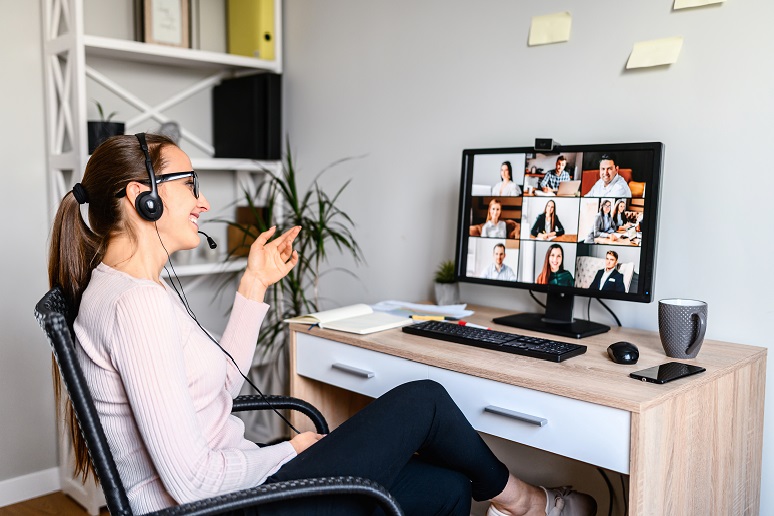
1. Have a designated Home Office area, and treat it as such

Avoid lounging around on any random sofa or room in the house. When you behave this way, there’s a tendency to be in “home” mode rather than “office” mode.


It results in behaviour such as checking social media when you should be working, or turning on the TV to distract yourself. Besides this, you’re more likely to be interrupted.
 
When you’re in a designated office space, most people will understand that you’re working; so they’re more likely to leave you alone. But if you have your feet up in the living room, they’re quicker to bombard you with requests to go out and buy lunch,
distract you by talking about their latest Netflix binge, etc.
 
So do set up a clearly designated office space, which you treat as though it were a real office. It doesn’t have to be fancy: just a spot with good lighting, and which is as quiet as your home can provide.


2. Use verbal as well as written communication

Unless you’re an excellent writer, it’s best to avoid communicating purely via text and email.

Some instructions or concepts are harder to grasp in text, than they are via direct conversation (try writing instructions on how to tie a shoelace, if you don’t believe us). There’s also the issue that written communication doesn’t carry tone or body language – if you’re not careful, you can accidentally come across as being sarcastic, scolding, angry, etc.

These sorts of miscommunication are a major barrier to everyone’s productivity, as you’ll end up having to hash things out later.

If you’re disciplined, you might also want to track the time spent composing emails or text messages. Some of us are naturally slower writers, and we may end up spending 20 to 30 minutes writing an email, when we could have just called and explained something in half the time.


3. Don’t forego a good night’s sleep, just because because you don’t have to

travel to the office

Warren As far back as 2017, researchers found that WFH tends to have a negative impact on sleep. It’s been discovered that WFH arrangements, ironically, lead to many workers being more sleep deprived, than if they had just travelled to the office.
 
The main culprit is the belief that, because we don’t need to wake up early and travel, we should sleep as late as we want. Over a period of months, some workers find that sleeping at two or three in the morning becomes their norm.
 
Don’t forget that lack of sleep is a major impediment to productivity. When you’re sleep deprived you tend to have less energy, are more prone to making mistakes, and are more quickly irritated by colleagues or clients.
 
When stretched out over long periods, sleep deprivation is a gateway to serious medical conditions like sleep apnea, depression, and even gastric reflux disease. These conditions will do nothing to help your productivity.
 
Try to stick to normal office hours.
 

4. Keep your break times as disciplined as you would in the office

Taking breaks is especially dangerous when you work from home. It’s quite easy for a lunch break to become a three-hour session in front of your Xbox, or for a “five-minute break” to become a whole-day movie marathon.
 
Back in the office, you didn’t have the ability to do these things. When you’re at home, no one is watching, and no one can stop you. So it’s important to be extra disciplined about breaks: set a proper timer to get back to work.
 
Also, try to avoid doing things on your break that you could not normally do in your office. For example, if you take a 10-minute break, you could go on a walk or get a cup of coffee…but don’t start playing video games, or anything else that would totally consume you.


5. Avoid using social media, shopping sites, or other distractions while on your

computer

Make a strict rule about not using these during work hours. If you want to use them, you can do so only at the end of the day.
 
When there’s no one to monitor you, even a few minutes to answer a comment can trap you on Facebook or Instagram for hours. And a simple order of groceries can end up becoming expensive – and time consuming – retail therapy on a dozen shopping portals.
 
These distractions are a leading cause of procrastination, making you put off work until 20 or 30 minutes before it’s due. It also tends to waste money, and waste energy if you get into any social media “debates”.
 
Most computers today allow you to create multiple login accounts – it might be a good idea to have a “work” account, in which you cut off access to your usual social media or bookmarked sites. You can switch back to your regular account when your daily tasks
are complete.
 

Finally, consider dressing the part

Image Source: Google
 
 The wonder of WFH is that you can dress however you want. However, studies on enclothed cognition show the way you dress can affect the way you think.
 
During IQ tests, for instance, some researchers found that people asked to wear white lab coats tended to fare better than those who wore casual clothes. You have also doubtless experienced some of this before: when you dress in a suit, for instance, you
may feel more professional and confident.
 
Of course, you don’t have to dress to the nines when you’re working from home. But you may want to consider, at least, not working in shorts and singlets, or even without a shirt. As comfortable as it may be, it signals to your mind that you’re relaxing, not working – and this can have a negative impact on your productivity.
 
Consider wearing some casual work outfits, of the sort you’d wear to the office on Friday. Sometimes, just the act of changing into the clothes can put you in a proper  frame of mind.
 
 
At Exodus Capital, we mentor our Financial Advisors to cope in a variety of different situations; from the realities of Covid-19, to handling busy roadshows. If you need a career and direction during this difficult pandemic, reach out to us and we’d be glad to help.


Disclaimer:
The content, views and thoughts expressed in the post belongs solely to us and not of Manulife Financial Advisers Pte Ltd or any group of organisations. It may not be applicable to everyone or all contexts. None of the information stated here constitutes an offer to buy or sell product, financial instrument. Any expression or opinion is personal to the author and the author makes no guarantee regarding the completeness and accuracy of any information supplied.